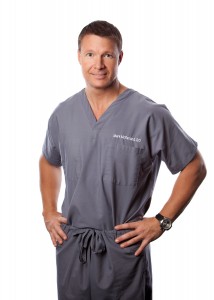
 Mark W. McFarland, DO
The bones in our bodies are living tissue and they can grow and repair themselves when broken or damaged. The process by which they do so is called osteogenesis, literally “bone beginning”. From birth, our bones grow and strengthen according to the genetic code passed along to us from our parents. At some point in late adolescence or early adulthood, our bones stop lengthening and we reach our maximum height. However, bone repair and regeneration will continue to occur over the course of our lifetime.
Think of a person who has a broken arm or leg. An Orthopaedic Specialist can realign the broken bones properly and then apply a plaster cast to provide a stable support structure while healing occurs. For simple fractures, the bones will join together in six to twelve weeks and the cast can be removed. The previously broken bones typically fuse together and the person can participate in activities as they did before the fracture happened.
This same repair process can be relied upon after Orthopaedic surgery. Bones which are surgically cut, drilled or altered will normally heal over time. In my practice as a Spine Specialist, I often operate on patients who need to have a spinal fusion because of a herniated disc or other problem that is causing them pain and dysfunction. The normal outcome of this surgery, spinal fusion, is a great example of how bones heal over time.
In a spinal fusion procedure, I remove most or all of the spinal disc and put bone fragments in the space where the disc once was. I know that over time, the bone fragments will join the two vertebrae above and below into one fused bone, where previously there were two bones. This provides stability to the bones and they don’t move anymore, which may have caused pain prior to surgery. The fusion is often stabilized by screws, plates and/or rods that I affix to give the spine added support while it heals.
Sometimes, bones don’t heal and join together properly after a spinal fusion surgery. This is called non-union. The most common reasons for non-union are: 1) the patient smokes; 2) they have multi-level fusion surgery; 3) they have severe spondylolisthesis (bone slippage); 4) they have had a previous spine fusion that failed; 5) they have other medical conditions, such as alcoholism, obesity or diabetes that can stunt bone healing, leading to non-fusion. Sometimes, an otherwise healthy patient will fail to fuse: think of Peyton Manning, famous Quarter-Back for the Colts and Broncos, who had a failed cervical fusion. Obviously, non-union is not the outcome that we want for spinal fusion patients.
It may surprise you to know that bones create a mild electric field during their growth. The rationale behind the use of a bone growth stimulator (BGS) is that more electrical energy applied to a healing bone surface will help the bone grow faster and fuse, providing stability and pain relief. I will order a BGS for the patient before the surgery, if I think they may have healing issues, the patient smokes or for multi-level fusions. I may also order a BGS after surgery, during the recovery process, if I feel that a patient’s bone fusion progress isn’t happening fast enough.
Bone growth stimulators are available to wear externally or for implantation internally at the time of the fusion surgery. Internal BGS units are always on and active (until the battery runs out), so compliance is not an issue with the patient. However, they are expensive and because the battery and wires will remain in the body unless surgically removed, this precludes the patient from having an MRI in the future. Because of this, OSC spine doctors don’t use or implant internal bone growth stimulators.
External BGS units are available for both cervical (neck) and lumbar (lower back) fusions. They are available as either units that connect to electrodes which deliver current to the skin over the fused area of the spine or as a type of brace that can either be worn or upon which a patient can recline when sitting. Typically, the BGS unit needs to be used for several hours a day over a three to nine month period to be effective.
The external units are safe and effective when used as frequently as directed. Patient compliance is key to efficacy. The electric current delivered is undetectable, causes no discomfort and cannot be adjusted, like a TENS unit. They are less expensive than internal units, but can also be pricey. Thankfully, insurance usually covers most of the associated cost.
When patients have difficulty healing from a major surgery, like spine fusion, it is reassuring to know that we have the technology to help patients recover fully with a Bone Growth Stimulator.